An ADA unit differs from a standard portable toilet in three measurable ways: the floor sits at ground level with no step-up, the interior clears a 60-inch turning circle so a wheelchair can rotate fully, and grab bars…
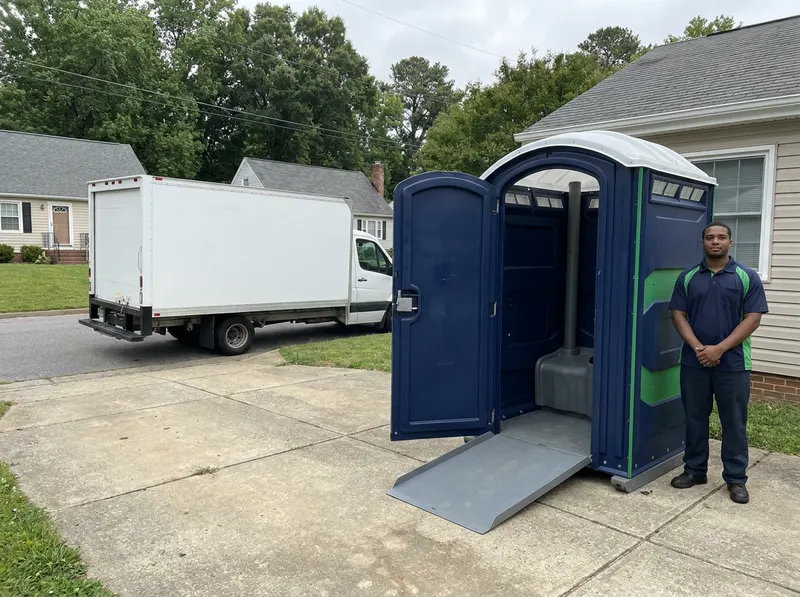
An ADA unit differs from a standard portable toilet in three measurable ways: the floor sits at ground level with no step-up, the interior clears a 60-inch turning circle so a wheelchair can rotate fully, and grab bars are anchored beside the seat. The Americans with Disabilities Act sets these dimensions, and public events open to the public are expected to meet them. A standard unit measures roughly 40 inches wide inside; an ADA unit runs closer to 62 inches wide to hold that turning radius. That width is why one ADA unit takes up the footprint of nearly two standard units on a placement pad.
Decision-fit comes down to who attends and where the unit sits. A wedding on Brown's Island or a festival at Byrd Park drawing the general public should include at least one ADA-accessible unit alongside standard toilets, because ground-level entry and grab bars serve wheelchair users, guests with mobility limits, and parents managing strollers. A construction crew in Scott's Addition or Manchester with no accessibility requirement on site can stay with standard units. The trade-off is footprint and reach: an ADA unit needs firm, level ground and a clear approach path with no curb or gravel lip, so a spot on the packed lot near The Diamond works, while a sloped grass edge in Oregon Hill may need a plywood pad.
Placement is straightforward. First, pick a firm, level surface within reach of the service truck. Second, confirm the approach is flat and at least 36 inches wide so a wheelchair can roll straight in. Third, keep the door swing clear of foot traffic. In tight rows of vendor tents in Shockoe Bottom or event lawns in the Museum District, the ramp threshold must face open ground, not a tent stake or cable run. On public sidewalks or streets in The Fan, Carytown, Church Hill, or Jackson Ward, a City of Richmond right-of-way permit may be required before a unit goes on pavement; placement on private property or an event field typically does not.
One detail people miss: the $250 minimum is the floor for any ADA rental in the Richmond area, and it covers a single unit for a short event term with delivery and pickup inside our standard service radius. Multi-week job-site terms, extra pumping visits during a high-traffic festival, or placements past Henrico and Chesterfield into farther counties change the total. An exact figure is confirmed against the address, the rental length, and the servicing schedule before delivery, so the invoice matches the quote.
Every job gets a firm, written price after a free on-site visit.
Tell us about your ada-accessible toilet rental job in Richmond and we'll send a clear, written quote, usually the same day.
 James River Portable Toilet Rental